
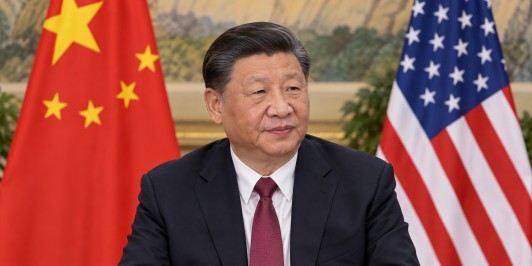
During his state visit to the United States, Chinese President Xi Jinping emphasized the need for cooperation between China and the U.S., suggesting that the two nations should work as partners rather than rivals. In a written speech upon his arrival, Xi underscored the deeply intertwined interests shared by the two countries, highlighting their long history of exchanges.
Xi articulated that the ambitions of China’s national rejuvenation and the United States’ vision of “making America great again” are not mutually exclusive. Instead, he proposed that these goals can complement each other and collectively contribute to global prosperity. This perspective underscores the potential for collaborative efforts to yield positive outcomes on a global scale.
The Chinese President’s visit and his remarks come at a time when the relationship between the two countries is under scrutiny, with both nations having significant economic and political influence worldwide. Xi’s call for partnership is a notable stance, given the current global climate where geopolitical tensions are often highlighted.
By emphasizing mutual benefits and shared objectives, Xi aims to steer the narrative towards building a more cooperative relationship, which he believes could lead to enhanced global stability and prosperity. His statements reflect a strategic approach to international diplomacy, seeking to bridge gaps through collaboration rather than competition.
Ultimately, Xi Jinping’s comments invite reflection on the broader implications of U.S.-China relations, encouraging both nations to consider how their interconnected futures might be navigated to foster a more peaceful and prosperous world. The call for partnership over rivalry marks a significant moment in diplomatic discourse between these two major global powers.
