
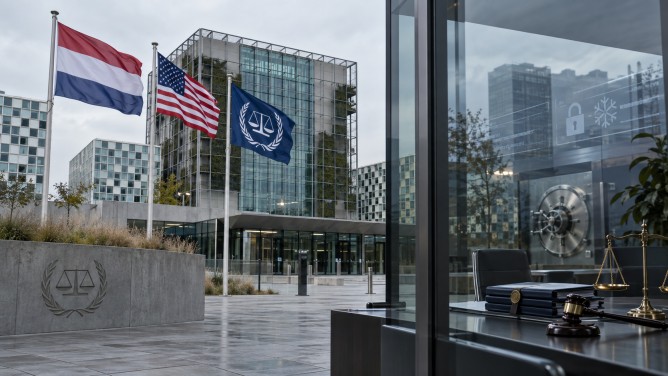
The Netherlands is bracing for potential fallout as new U.S. sanctions loom over the International Criminal Court (ICC), threatening to disrupt its essential operations. The Dutch government is stepping in to mitigate these consequences, considering measures to support the court’s continued functioning, which could include ensuring that staff are paid, witnesses protected, and detention facilities maintained.
This preparation comes as tensions between the U.S. and the ICC escalate, following the Trump administration’s existing sanctions on several ICC officials, including judges and senior legal personnel. Washington’s actions stem from its strong objections to the ICC’s investigations involving U.S. and Israeli officials, accusing the tribunal of overreaching its authority.
The potential expansion of sanctions to target the ICC as an institution could severely impact its operational capabilities. Such measures would likely restrict transactions with U.S. companies, affecting the court’s access to banking, insurance, and technology services. In anticipation, the ICC has begun to pivot away from U.S.-based service providers and is reevaluating its financial and technological frameworks.
Located in The Hague since its inception in 2002, the ICC’s mandate is to prosecute individuals for crimes of genocide, war crimes, crimes against humanity, and aggression when national systems fail to do so. As the host country, the Netherlands has previously engaged in discussions to alleviate the impact of any sanctions, underscoring its commitment to supporting the court’s critical mission.
This unfolding situation highlights the broader implications of international legal disputes and the intricate balance of power between global entities and national interests. As the Netherlands positions itself to safeguard the ICC’s operational integrity, the world watches closely, aware of the potential ripple effects on international justice and diplomatic relations.
