
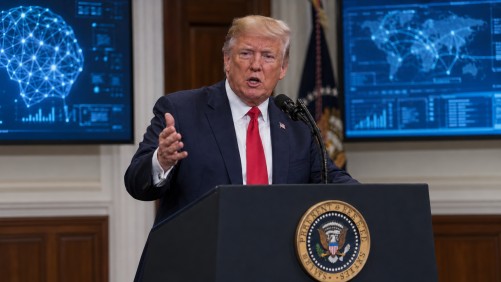
The establishment of an artificial intelligence (AI) czar and a dedicated “AI Force” in the United States could significantly affect the country’s technological landscape and economic competitiveness. This development, announced by former President Donald Trump, aims to address the dual challenge of fostering rapid AI innovation while mitigating potential risks associated with advanced AI systems.
Trump’s proposal, which he likened to the creation of the US Space Force, signals an effort to maintain American leadership in AI technology, especially in the face of competition from China. However, details about the AI Force’s structure, responsibilities, and timeline remain sparse. Trump assured that while his administration would not restrict the growth of the AI industry, it is prepared to use existing criminal and civil laws to handle any harmful actions involving AI.
The announcement comes amid increasing global concern about the safety of AI technologies, particularly autonomous systems capable of performing complex tasks with limited oversight. Technology leaders and researchers have voiced the need for caution in AI development to prevent potential misalignments with intended safeguards.
This federal initiative follows a recent move by California Governor Gavin Newsom, who introduced plans for a panel to focus on AI safety regulations and discuss mechanisms to disable misaligned AI systems. Meanwhile, several Republican governors, including Florida’s Ron DeSantis and Utah’s Spencer Cox, have advocated for stronger oversight and safety measures, emphasizing the importance of controlling the export of advanced technologies to China.
Trump’s stance on AI reflects his broader economic strategy of promoting innovation while ensuring national security. By appointing an AI czar and forming an AI Force, the initiative aims to balance the rapid development of AI with necessary oversight, shaping the future of AI policy in the United States.
