
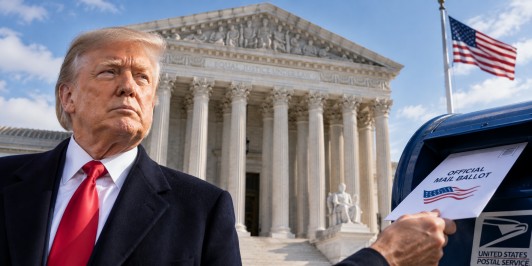
The U.S. Supreme Court has decided against the Trump administration’s proposed new restrictions aimed at mail-in voting, ensuring that states can continue with their current ballot-sending procedures ahead of the November midterm elections. This ruling maintains an injunction that blocks these restrictions while the legal battle unfolds, a significant development considering the reliance millions of Americans have on mail-in voting.
The administration had proposed that states adopt new methods for verifying and processing mail ballots, which included additional checks against federal records, standardized ballot envelopes, and using an online system for voter information submission. This move was challenged by several states and voting rights groups, arguing that the president lacks the constitutional authority to set nationwide election administration rules.
Election officials expressed concerns that implementing such substantial changes so close to the midterms could disrupt the voting process. Many states had already begun distributing mail ballots as the administration’s proposed system was still under development. The Supreme Court’s order indicated that the administration is unlikely to succeed at this stage of the legal challenge, and current circumstances do not justify lifting the lower court’s injunction.
Voting rights organizations and election officials welcomed the Supreme Court’s decision, emphasizing that maintaining existing procedures would offer voters and local election authorities greater certainty. The dispute traces back to an executive order issued earlier in the year, directing the postal service to limit the delivery of some mail ballots based on federal records information. The administration argued that federal control over the postal service justified establishing rules for handling election mail.
Opponents, however, contended that such changes could hinder the delivery of millions of ballots and cause confusion among voters and election officials close to the election date. While the Supreme Court’s decision doesn’t definitively resolve the legal validity of the proposed restrictions, it ensures the existing mail-ballot system remains in place as the broader legal challenge continues.
