
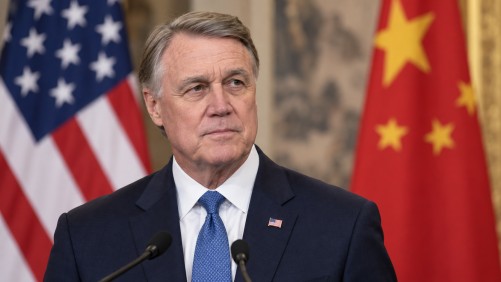
US Ambassador to China David Perdue has cautioned that the positive tone of the recent summit between Chinese President Xi Jinping and US President Donald Trump might not translate into smoother relations between the two nations. Despite agreements on several economic issues, Perdue emphasized that major differences persist, particularly concerning the US’s dependence on China for essential supplies like rare earth elements, magnets, pharmaceuticals, and commercial shipbuilding.
Perdue’s warning came in the wake of Xi’s three-day visit to the US, which included high-profile diplomatic engagements with Trump. While the summit was presented by China as a move towards a more stable relationship based on mutual respect, fairness, and reciprocity, Perdue highlighted ongoing US concerns about China’s dominance in strategic supply chains. He described the current level of dependence on China for critical materials as unacceptable for the United States.
Rare earth materials and magnets are crucial for industries such as defense, automobiles, electronics, and renewable energy. The US has been actively seeking to diversify its supply chains to mitigate potential disruptions from China, reflecting a broader strategy to reduce reliance on Chinese exports in these sectors.
Beyond supply chain issues, the broader US-China relationship continues to grapple with sensitive topics, including Taiwan, technology, trade, and Iran. Both countries have committed to maintaining negotiations on these fronts, but the latest summit did not resolve their deeper strategic differences.
Chinese President Xi acknowledged during his visit that disagreements and challenges would persist, even as the two nations strive for a more constructive dialogue. Perdue’s remarks underscore the complexity of US-China relations and the hurdles that both countries face in reaching a more balanced partnership.
