
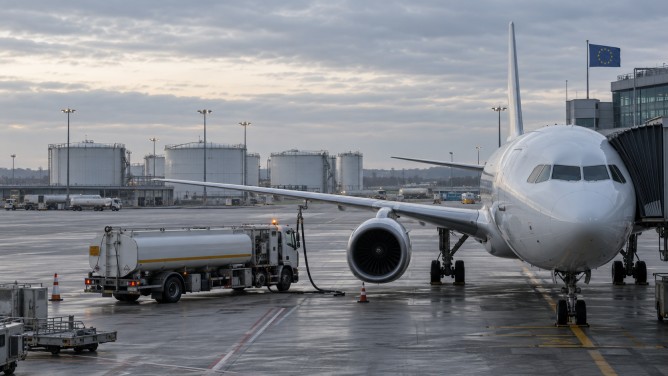
Europe may soon grapple with a renewed jet fuel shortage, impacting airlines and potentially leading to increased ticket prices and disruptions in air travel. Despite a marked rise in imports from Asia and other regions, jet fuel reserves in key European hubs are dwindling, posing challenges for the aviation sector as winter approaches.
The jet fuel stocks in Amsterdam, Rotterdam, and Antwerp have plummeted to their lowest levels in seven years, a worrying trend observed in the week ending September 10. Analysts predict that Europe could encounter a jet fuel shortfall of approximately 510,000 barrels per day in the fourth quarter, signaling potential turbulence ahead for the continent’s aviation industry.
Despite this looming deficit, the Swedish Energy Agency reassures that supplies of gasoline, diesel, and jet fuel remain stable, although they acknowledge that aviation fuel supply constraints could arise in both Europe and Sweden in the short term. This cautious optimism comes as Asian jet fuel imports to Europe have surged, averaging about 129,000 barrels per day in September, supplemented by additional shipments from Canada, Nigeria, and the United States.
However, the global energy landscape is fraught with uncertainties. Geopolitical tensions in the Middle East, particularly conflicts affecting energy infrastructure in Saudi Arabia, have exerted additional pressure, driving up oil and gas prices across Europe. This volatility underscores the fragile balance of energy supplies and the potential for further disruptions in the already strained market.
