
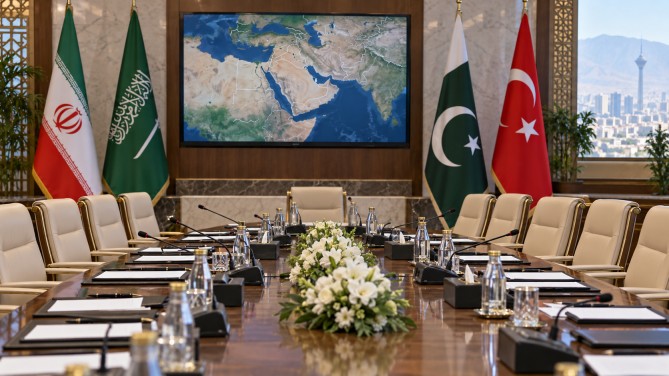
In a bid to ease longstanding tensions in the Middle East, Iran is hosting high-level regional security talks in Tehran. The meeting includes key figures such as Saudi Arabia’s Defence Minister Khalid bin Salman, Pakistan’s army chief General Asim Munir, and Turkish intelligence head Ibrahim Kalin. Discussions will focus on fostering regional stability and exploring diplomatic solutions to ongoing crises.
The talks are part of broader diplomatic initiatives aimed at promoting dialogue among nations impacted by regional conflicts. Saudi officials have highlighted that the meeting is intended to support mediation efforts led by countries like Qatar and Pakistan. The discussions come against a backdrop of heightened tensions involving Iran, the United States, and Israel, as well as other security concerns in the region.
One significant issue on the agenda is the situation in the Strait of Hormuz, a vital artery for global oil and liquefied natural gas shipments, which has seen increasing disputes. The stability of this key maritime route is crucial for global energy security and international trade, making it a focal point of concern for the participating nations.
The ongoing conflict in Yemen remains a critical aspect of regional instability. The Iran-backed Houthi movement’s attacks on Saudi Arabia have prompted a military response from the Saudi-led coalition, which has targeted Houthi missile sites and infrastructure. Meanwhile, Saudi Arabia has continued to bolster its air defenses, with Greece maintaining its Patriot missile defense system in the kingdom to address security threats.
As regional powers convene in Tehran, there is hope that dialogue will lead to measures that can contain conflicts, enhance security cooperation, and prevent further escalation. However, the success of these talks will largely depend on the ability of the involved parties to translate diplomatic engagement into effective solutions that address the complex disputes plaguing the region.
