
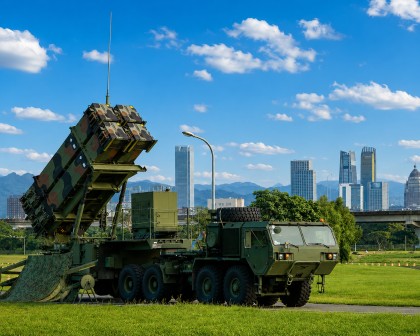
Acting Navy Secretary Hung Cao announced a temporary halt in arms sales to Taiwan as the United States reallocates its military resources to address ongoing operations related to the Iran conflict. Speaking at a congressional hearing, Cao emphasized that the suspension is aimed at conserving munitions necessary for U.S. military engagements. He assured that foreign military sales would resume once the administration deems it suitable.
The suspension affects a significant weapons package destined for Taiwan, which has been awaiting approval for several months. Final authorization of the arms deal is contingent upon decisions by senior administration officials, including Secretary of State Marco Rubio and Defense Secretary Pete Hegseth. In response, Taiwan’s presidential office noted that it has not yet received formal notification of any modifications to the proposed arms agreement.
This development has intensified concerns in Taipei, particularly following recent discussions between U.S. President Donald Trump and Chinese President Xi Jinping, where Taiwan reportedly featured prominently. China’s government maintains its strong opposition to U.S. arms sales to Taiwan, which it views as part of its sovereign territory. Beijing has consistently cautioned against international support for Taiwan and has not dismissed the possibility of using force.
President Trump’s recent statements have further added to the uncertainty regarding future U.S. support for Taiwan. He has suggested that the weapons packages could serve as a “negotiating chip” in dialogues with China and stated that he would make a decision on the pending sales at a later stage. Despite the current pause in arms sales, the Taiwan Relations Act obligates the U.S. to supply Taiwan with defensive military equipment.
