
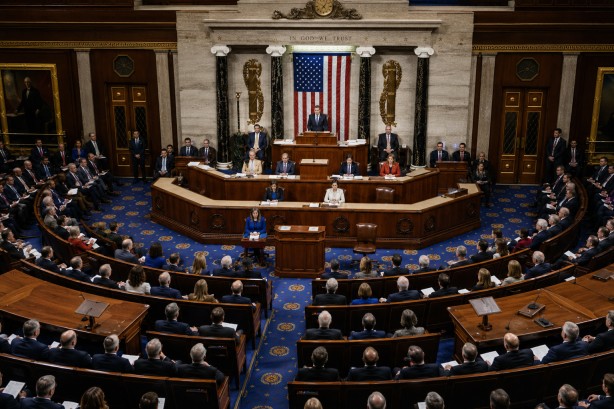
In a decisive move, the U.S. House of Representatives passed the $1.15 trillion National Defense Authorization Act (NDAA) with a narrow 216-212 vote, largely divided along party lines. The legislation, which now heads to the Senate, is a critical defense funding package that has sparked intense debate over military policy and broader political issues. Central to the bill are provisions for 5% to 7% pay raises for military personnel and substantial investments aimed at bolstering the U.S. armed forces.
Republican leaders have underscored the necessity of the NDAA to modernize the military and strengthen national defense capabilities. However, the bill has faced significant opposition from Democrats, who argue that the level of defense spending is excessive, especially when contrasted with cuts to other domestic programs. The passage of the bill has been further complicated by ongoing political tensions, particularly concerning President Donald Trump’s recent military actions in the Middle East.
President Trump’s decision to carry out military strikes against Iran without congressional approval has sparked concern among lawmakers about the expansion of U.S. military involvement in the region. Additionally, the bill includes voting-related provisions supported by Trump, such as stricter voter identification requirements and limits on mail-in voting, which have been contentious among Democrats. They argue that these measures are inappropriate for inclusion in defense legislation.
Throughout the legislative process, the House debated several amendments, rejecting a proposal that would have ceased U.S. military aid to Ukraine. Other amendments regarding transgender military policies and defense healthcare also provoked vigorous discussion. Despite these debates, the core elements of the NDAA remain focused on enhancing the military’s operational capabilities.
In a separate development, House Republicans advanced a budget framework authorizing $73 billion for military operations involving Iran, although this authorization falls short of the broader funding levels sought by the Pentagon. As the NDAA moves to the Senate, the divisions within Congress highlight the challenges of balancing defense priorities with other pressing domestic and international concerns.
